Torremolinos está a solo 13 kilómetros de la ciudad de Málaga. Fue la cuna del turismo en la Costa del Sol y sigue siendo un destino turístico muy popular, sobre todo entre los británicos y los holandeses.
El turismo en la Costa del Sol empezó en Torremolinos
Uno de los primeros sitios que te viene a la cabeza cuando oyes hablar de «vacaciones en la Costa del Sol» es Torremolinos. Probablemente sea porque Torremolinos fue donde empezó el turismo en esta parte de España. De hecho, fue idea del dictador Francisco Franco desarrollar el turismo aquí a finales de los años 50 y principios de los 60.

La playa de La Carihuela, en Torremolinos, Málaga
El turismo ya existía en la Costa Azul y la Riviera italiana, así como en San Sebastián, en el norte de España. El problema de Málaga era que estaba a dos días más de arduo viaje en tren desde esos otros destinos turísticos. Por suerte, sin embargo, la «Costabella», como se conocía al principio a la Costa del Sol, tenía un aeropuerto entre Torremolinos y Málaga. Al principio era una base de repostaje para los aviones de Aire Poste que volaban de París a Buenos Aires. Más tarde se convirtió en una base aérea militar española. En 1946 comenzaron los vuelos regulares nacionales e internacionales. Dos años más tarde se inauguró una terminal dedicada exclusivamente a los pasajeros civiles.
Los orígenes del nombre de Torremolinos
En español, «Torre» significa torre y «Molinos» significa molinos. ¡Ahí lo tienes! En el siglo XVIIIXX En el siglo XIX había un montón de molinos de agua por la zona. Además, había una torre de vigilancia construida en la época árabe llamada Torre del Pimental. La torre se construyó en la costa para vigilar a los piratas y a los invasores. Los molinos de agua se construyeron cerca de la torre de vigilancia. Por eso, se la conocía como «la torre de los molinos»: Torremolinos.
Hoy en día, solo queda uno de esos molinos. Sin embargo, la torre, que tiene ya varios siglos, sigue en pie. La puedes ver al final de la calle principal, la calle San Miguel, justo antes de las escaleras que bajan a la playa.

La Torre Pimental, una torre de vigilancia de la época árabe, en Torremolinos, Málaga, España
La primera persona de la que se tiene constancia que tomaba el sol «en topless» en España fue en Torremolinos
En el verano de 1930, el famoso artista catalán Salvador Dalí y su mujer, Gala, visitaron Torremolinos. Por aquel entonces era un tranquilo pueblo de pescadores. Así que ya te puedes imaginar la sorpresa de los pescadores locales cuando vieron a Gala posando en topless para su marido, el artista, en la playa. De hecho, ¡fue la primera bañista en topless de la que se tiene constancia en toda España! La imagen de Gala en topless ha quedado inmortalizada en una estatua del paseo marítimo de Torremolinos.

Estatua de Gala, la mujer de Salvador Dalí, con el torso al aire en Torremolinos.
Los primeros años del turismo en Torremolinos
Como ya he dicho antes, el turismo empezó a desarrollarse en la época de la dictadura de Franco. Los primeros turistas que llegaron en masa fueron los suecos. Aviones llenos de extranjeros rubios y de ojos azules aterrizaron en Torremolinos. Las mujeres españolas de aquella época no llevaban bikini. Si estaba prohibido o si era una elección personal, eso es discutible. Sin embargo, las turistas sí que llevaban bikini.
Las señoras mayores de aquí, en Málaga, me han contado historias sobre excursiones en autobús que se organizaban para que los chicos de por aquí fueran a Torremolinos y se pasaran el rato por el paseo marítimo mirando a todas esas chicas extranjeras en ropa ligera que había en la playa.
Podemos dar las gracias a los primeros turistas que vinieron a esta parte de España por el nombre con el que nos llaman a los extranjeros. Aquí no somos «gringos». ¡Nos llaman «guiris»! Al parecer, esta palabra inventada era lo que los lugareños creían oír decir a las multitudes de turistas. Y eso es porque todo el mundo va por ahí diciendo: «¿Dónde está? ¿Dónde está? ¿Dónde está?». Créeme, si lo dices lo suficientemente rápido y con la suficiente frecuencia, sonará como si dijeras: «guiri, guiri, guiri». Y, a día de hoy, seguimos siendo todos «guiris».
La época dorada del turismo en Torremolinos
In its hey-day, Torremolinos was the favourite destination of all kinds of personalities, film stars and great musicians. Frank Sinatra, Bridgit Bardot, John Lennon, Ingrid Bergman, Ava Gardner, Elizabeth Taylor, Grace Kelly and Rainier of Monaco, Sophia Loren, Sean Connery, and Raquel Welch to name a few.
The hotel of choice for the ‘glitterati’ was Hotel Pez Espada. It was a 5-star hotel that opened on Sunday 31 May 1959. For the locals, opening a 5-star hotel in what, at that time, was not much more than a poor fishing-village, seemed preposterous. However, it was a great success. It held many extravagant events for its illustrious guests. Its walls must know many star-studded stories. The hotel still exists today and has maintained its retro-style even with its modern renovations.

Hotel Pez Espada, where the glitterati stayed in the early days of tourism in Torremolinos
One famous guest, Brigitte Bardot, famously tried to get her donkey, Romeo, into her hotel room. Frank Sinatra, ‘infamously’ had a very loud argument in the Hotel Pez Espada, was arrested and spent a night in the cells of the police station in Málaga. On being released he swore he would ‘never visit this damned country again!’

Street art mural of Frank Sinatra in Torremolinos, Málaga
Spanish celebrities in Torremolinos
In the 1970’s, Torremolinos was a favourite spot for Spanish celebrities such as Manolo Escobar, Lola Flores, Carmen Sevilla, the Duchess of Alba, El Fary and Rocío Jurado. They turned the town into a luxury, classy and cool destination with their party-going and antics filling the glossy magazines of the 70’s.
As you wander around the town of Torremolinos, you can see street art murals that pay homage to its illustrious visitors of the past.
The First Gay & Lesbian Bars in Spain
As well as being a pioneer in tourism, Torremolinos was a pioneer in openness, opening the first gay bar and lesbian bar in Spain, La Nogalera. The bar was located not far from Pasaje la Begoña. In this small L-shaped street, there were around 50 gay bars and live music venues between 1962 and 1971.
With the tourism boom, the international jet-set and Hollywood celebrities, Torremolinos desired to project a modern image to the world. Torremolinos became an oasis of freedom for the LGTBI community. Even though homosexuality was illegal and punishable by imprisonment at that time, the authorities turned a blind eye for the most part.
Pasaje la Begoña became nationally and internationally famous with celebrities of all sexual orientations hanging out there. John Lennon and the Beatles manager Brian Epstein hung out on some of the terraces there as well as other celebs like Grace Jones and Sara Montiel.

Old image of Pasaje la Begoña in its hey-day
Unfortunately, this age of freedom came to an end on the night of June 24th 1971. The police raided the area. 114 people were arrested and around 20 bars were shut down.
Now, years later, the government of Andalusia has officially declared the Pasaje la Begoña a Place of Historical Memory and Cradle of the Freedoms and Rights of LGTBI people. As well, it has been twinned with the Stonewall Inn in New York, which suffered police raids in 1969. These days, Torremolinos is actively marketed by the local authorities as a gay-friendly town. In 2017, Torremolinos co-hosted World Pride along with Madrid and celebrates its own Pride Festival every June. In fact, it is the third biggest Pride Festival in Spain.
visit la casa de navajas
In the 1920s and ’30s, before the tourism boom, some affluent families chose Torremolinos as a place to have their second home. Therefore, we can still see today some houses and buildings of very interesting archictecture from that era, such as that of the Navajas family.

Casa de Navajas, Torremolinos, Málaga
The archictectural style is neo- mudejar (new arabic style) which was very popular in Andalusia during that time. More like a palace than a house, you can find it not far from the Bajondillo beach (and the main tourist office) in C/ Antonio Navajas Ruiz. Today it is mainly used for weddings and other private events. It is worth the visit to see how the wealthy lived back then and to enjoy the lovely views from the terraces. Entrance is free. Closed on Mondays & Tuesdays. The rest of the week it is open from 10.30 – 14.00h & 18.30 – 22.00h.
Homage to Pablo Picasso in Torremolinos
Did you know that the most famous painter of the 20th century was born in the city of Malaga? And that Malaga is the only city in the world that has TWO Picasso museums. (Just two more reasons to visit!) And as you cycle or walk along the promenade in Torremolinos, you can’t miss the enormous sculpture inspired by Picasso’s painting “Two Women Running on the Beach”. The statue was made by sculptor Salvador Garcia. It is located in the middle of the roundabout of the Plaza de Lido, Torremolinos.

Sculpture that pays homage to Picasso’s painting: Two Women Running On The Beach
cycling to torremolinos
The town of Torremolinos is approximately 13 kms from Malaga City Centre. Of course, we recommend renting a MALAGA BIKE city or trekking bike. Follow our going west bike route which not only takes you along the Mediterranean coast but also through a nature reserve and across the longest wooden bridge in Europe!

The longest wooden bridge in Europe over the River Guadalhorce, Malaga
Once you arrive in Torremolinos, enjoy a cycle along the bike path for a few kilometres. There are plenty of typical beach bars that serve the local famous fish dishes. As well, the first few beach bars are more kind of chill out cocktail bars, often with DJs or live music in summer months. The town of Torremolinos is above the coast. So you can choose to cycle up a bit of a steep hill or lock your bike at the promenade and either walk up the steps or take the elevator. The main street of the town is called Calle San Miguel. The end of the street terminates in a large pedestrianised area full of shops and bars.
If you want to continue along the promenade, you will reach La Carihuela. This is a quaint fisherman’s area where the famous Hotel Pez Espada is located. This area is very popular with the Dutch, so you can find some Dutch restaurants and shops over there.
How to get to Torremolinos by public transport
If you are not up for cycling to Torremolinos, don’t worry, it is very easy to get to by public transport.
By train
Take the C1 line Cercanias train from the Malaga Centro Alameda station, which is just a 5 minute walk from the MALAGA BIKE shop. Trains run every 20 minutes and the trip takes approximately 20 minutes. When you come out of the station in Torremolinos, you will be in the actual town, not far from the main street Calle San Miguel. (Useful tip: you don’t need to buy a train ticket. Simply scan a debit card to enter to the platform and then scan it again to leave).
En autobús
Just behind the MALAGA BIKE shop, you can find the sub-bus station on Avda. Manuel Agustín Heredia. Buses run regularly and the journey takes approximately half an hour. Once in Torremolinos, the bus drops you off in the town. If you would like to visit the beach, then you have to walk down the steps at the end of Calle San Miguel or take the elevator.
fiestas in torremolinos
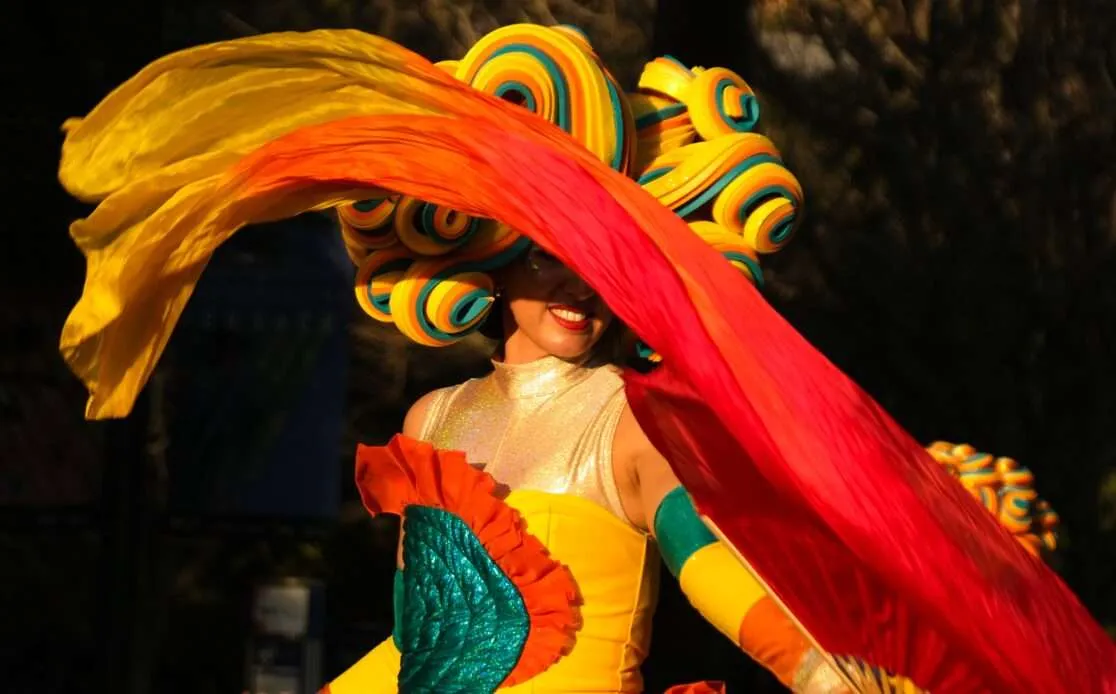
Every town and city in Andalusia celebrates their own fair or ‘feria’. Feria is usually a week-long party involving singing, dancing and drinking in the streets. As well, it is typical to see the locals all dressed up in their traditional clothes and riding horseback around the town. In Torremolinos, they hold a romeria- a parade with gypsy caravans. The feria in Torremolinos is called the San Miguel Fair. It is held late September- early October. However, there are a plethora of other fiestas all throughout the year.

The Romeria during the San Miguel Fair in Torremolinos Photo: Turismo Torremolinos